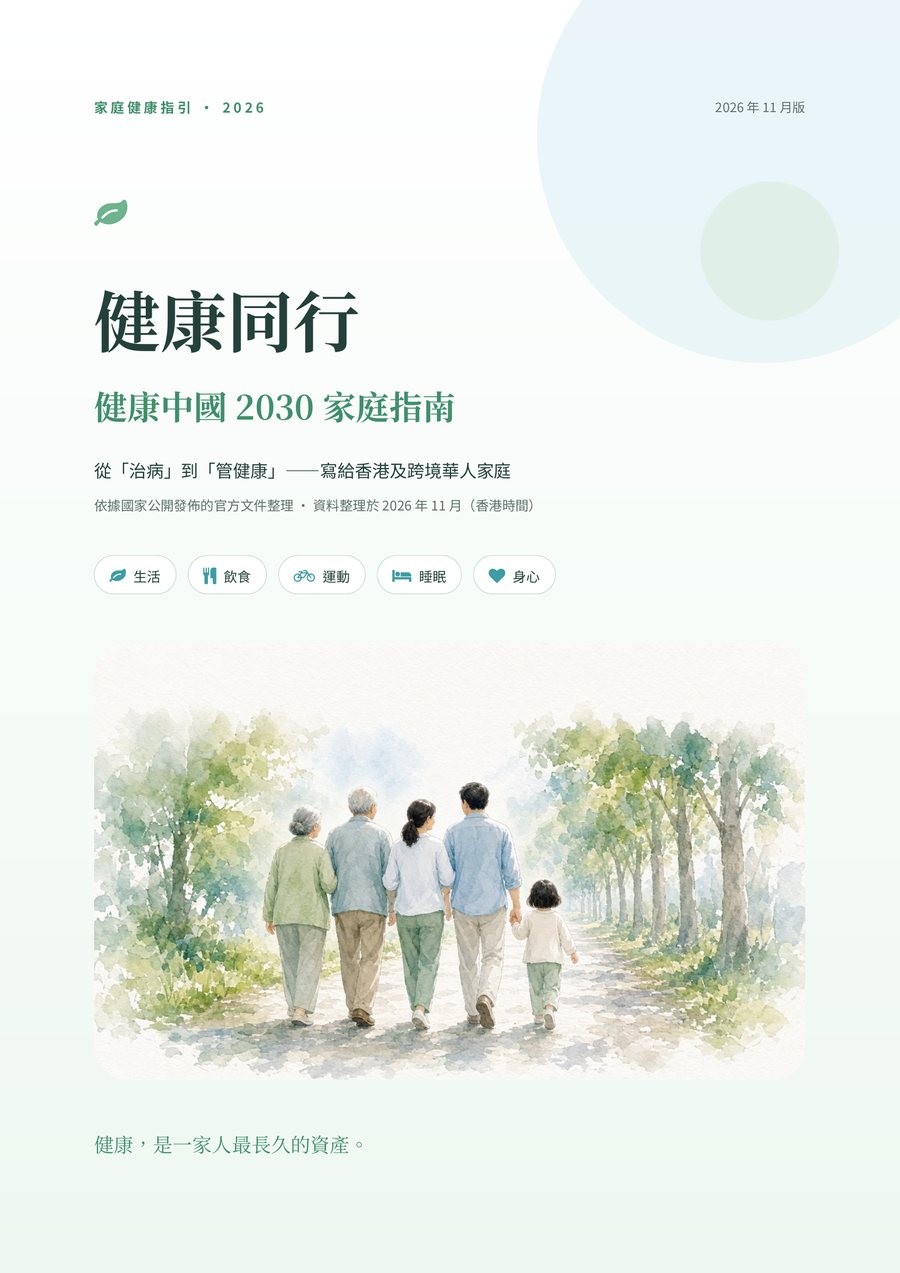
Walking Together in Health: Healthy China 2030 Family Guide
12 pages
Available in Traditional Chinese only for now
The family-relevant points from Healthy China 2030, gathered into a concise guide.
Download PDFA guide for your family's plans.
In conversations with many families in recent years, we have found that what matters is not only children's education and the arrangement of assets, but also parents' health, our own rest and stress, and how to build good habits for the next generation. We have come to see that health is often the foundation of all planning.
China's Outline of the "Healthy China 2030" Plan puts forward "joint contribution and shared benefits, and health for all", and shifts health work from a focus on treating illness to a focus on people's health. We have drawn out the points most relevant to families, and gathered them into a concise guide, together with a goals workbook that families can fill in together, in the hope of helping each family start with a small action today.
Physical and mental health matter equally. A family's emotional nourishment begins with the parents; looking after health together is also looking after one another. May every family walk together in health.
12 pages
Available in Traditional Chinese only for now
The family-relevant points from Healthy China 2030, gathered into a concise guide.
Download PDF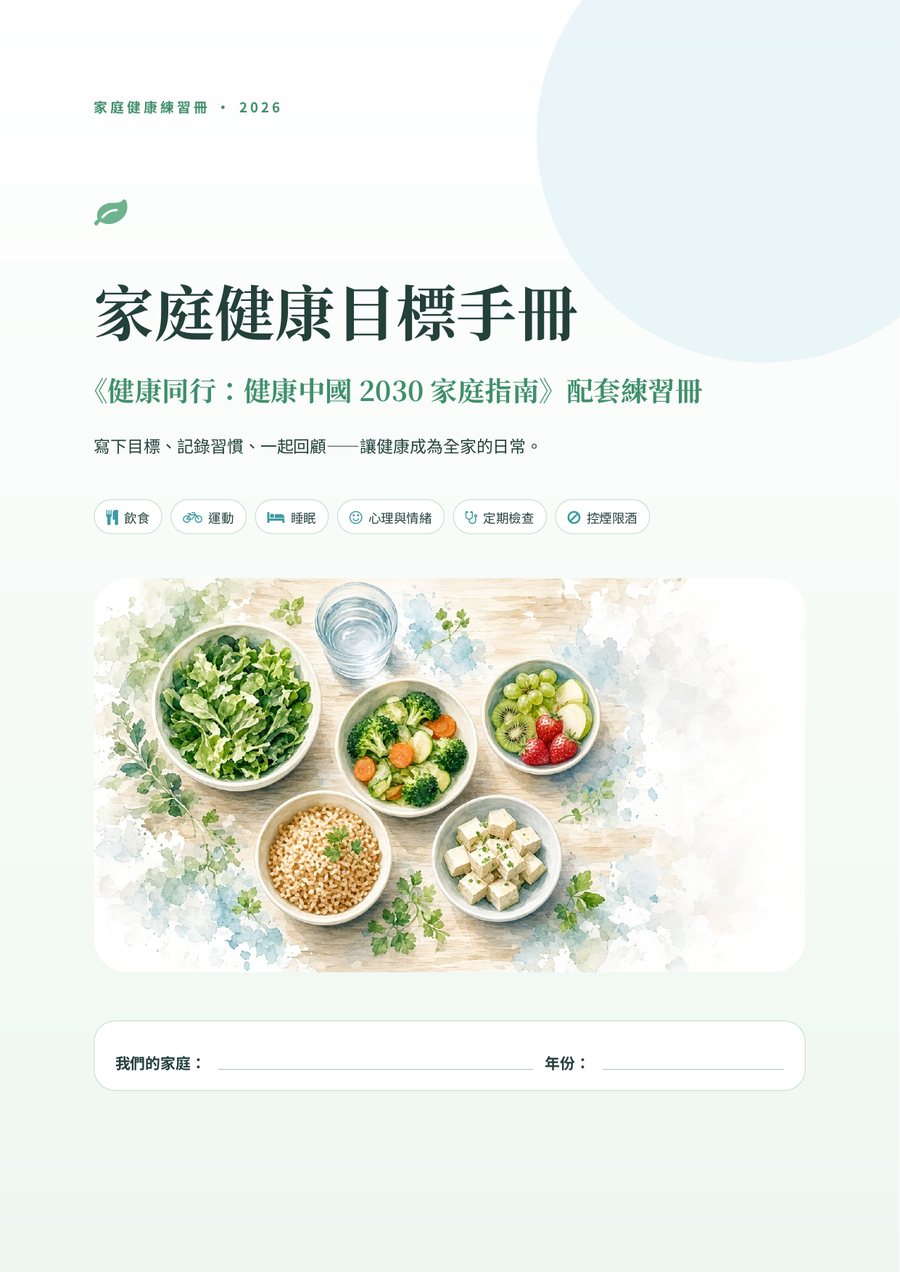
8 pages, printable or fillable on a computer
Available in Traditional Chinese only for now
For families to set goals with the guide and review them monthly.
Download PDFFor personalised health-planning coordination, please contact your Shing Fung Consultant.
General health information only; this does not constitute medical advice.

Hong Kong is small, yet its routes into post-secondary education are remarkably diverse: there are eight UGC-funded universities, as well as self-financing post-secondary institutions, and vocational and continuing education programmes. The HKSAR Government’s policy goal is to develop Hong Kong as an international post-secondary education hub, and to build the “Study in Hong Kong” brand.
According to the QS World University Rankings 2027, published on 18 June 2026, five of the eight UGC-funded universities are in the global top 100, and it is also the first time that two Hong Kong universities have entered the global top 20: The University of Hong Kong at 11th, The Chinese University of Hong Kong at 18th, The Hong Kong University of Science and Technology at 33rd, The Hong Kong Polytechnic University at 50th, and City University of Hong Kong tied at 52nd. Rankings change with each new edition, and they are not the only measure of admissions difficulty or programme quality.
On research, the Research Grants Council under the UGC funds more than 1,500 new projects a year, and in 2025 launched a new HK$1.5 billion round of the Research Matching Grant Scheme.
After graduation, the pathways can be equally diverse. Eligible non-local fresh graduates may separately apply under the Immigration Arrangements for Non-local Graduates (IANG): they need not already have a job when applying, and may normally be allowed to stay for 24 months. They may also go on to further study overseas, or return to the Mainland with the international learning experience gained in Hong Kong.
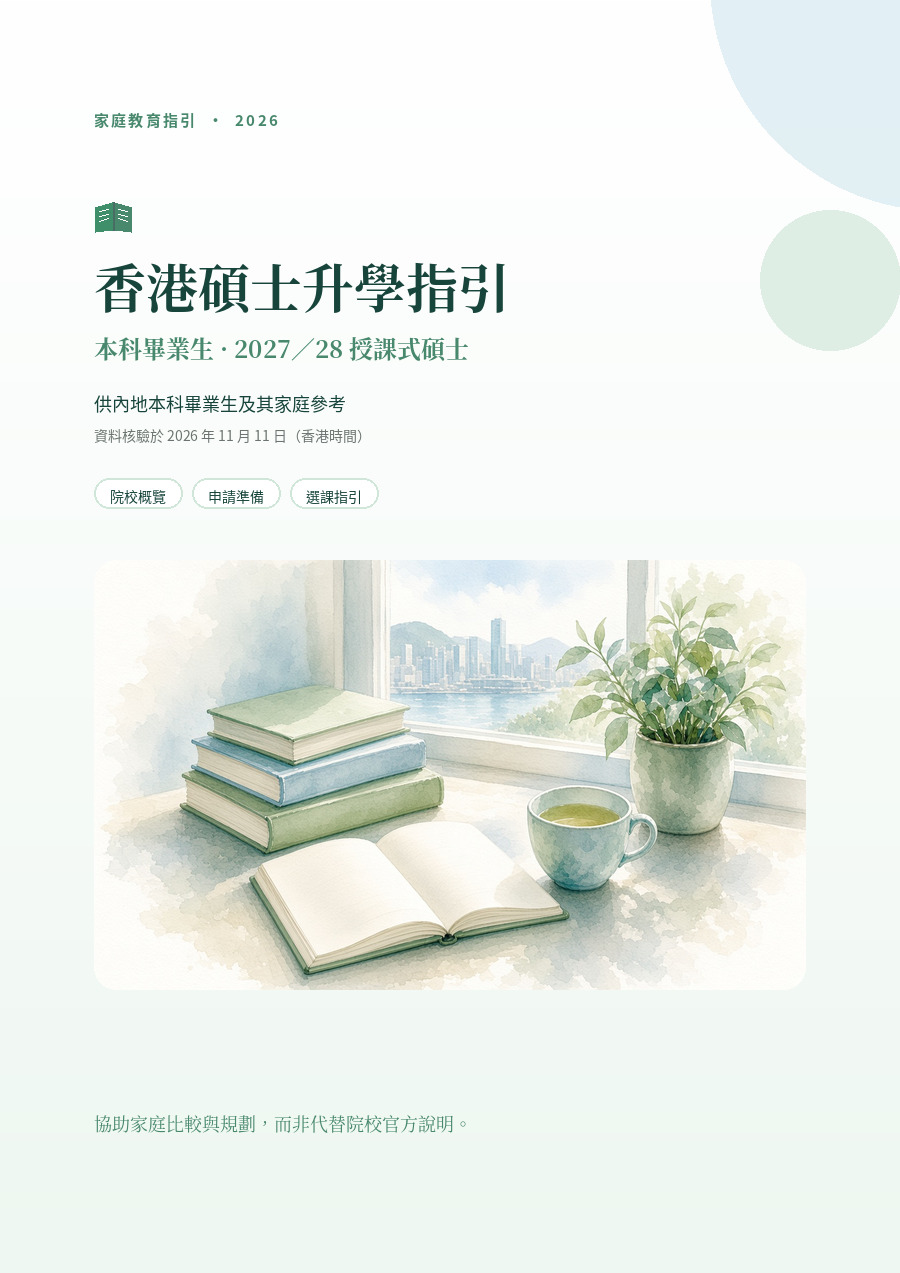
14 pages
Available in Simplified Chinese only for now
Once you have decided to study in Hong Kong, you may download this guide for preparation on applying for taught master’s programmes. This guide covers taught master’s programmes for the 2027/28 academic year only, and is not an official admissions prospectus of any institution.
Download PDFGeneral education information only. Details may be updated; please refer to the institutions and official announcements.
The premium lookup and plan lookup below are for approved VHIS plans. This is a product-information lookup, not medical advice.
Open the full tool on a separate page